Large-format printing is no longer a $2,000 hobby tax. In 2026, a 420mm cube print can come from a $469 bed-slinger or a $579 CoreXY kit. The machines in this guide all offer at least a 300mm build plate in one axis, which changes what you can make. Full-size helmets, cosplay armor, drone frames, and tool jigs no longer need to be split into small parts. Larger beds also expose weaknesses in motion systems, bed adhesion, and filament calibration. That is why we focused on machines with proven thermals and solid auto leveling. Check our best 3D printers 2026 if you need a broader look before locking into large format.
We evaluated each printer by its usable build volume, not just spec sheet numbers. A 420x420x500mm printer only matters if the bed heats evenly and the frame stays square during fast travel moves. We also checked print speed, nozzle and bed temperatures, layer resolution, and real prices. Material selection changes on big prints. A 20-hour PLA helmet behaves differently from a 40-hour ABS part on an open-frame printer. Simplify3D’s material properties reference is a good place to confirm temperature and warping behavior. Our 3D printing materials guide covers the same ground without the tech jargon.
There is a clear split in the large-format market. Budget bed-slingers offer 400mm volume for under $500 but shake at high acceleration. Premium CoreXY machines print faster and more accurately but cost three to five times as much. For most first-time large-format buyers, a 300mm or 420mm bed-slinger is the smarter move. It is easier to repair and upgrade. If you need ABS or ASA, check our best enclosed 3D printers because open-frame machines struggle with warp. Large prints are also slower if your slicer settings are bad.
Speed claims in 2026 need context. A 500mm/s spec does not mean you will get clean prints at that speed. Look for input shaping, pressure advance, and a high-flow hotend. Bambu Lab’s current lineup demonstrates how firmware-based input shaping changed speed expectations. But raw speed is less important on a 35-hour helmet. We prefer thermal stability and layer consistency over peak velocity. That is why our picks include both fast bed-slingers and more restrained CoreXY machines. For people chasing pure speed on smaller parts, our fastest 3D printers guide is the better starting point.
How Do the Top Options Compare?
| Model | Best For | Build Volume | Max Print Speed | Price |
|---|---|---|---|---|
| Anycubic Kobra 2 Max | Best overall large format | 420 x 420 x 500 mm | 500 mm/s | Check the Anycubic Kobra 2 Max on Amazon |
| Elegoo Neptune 4 Max | Best budget large printer | 420 x 420 x 500 mm | 500 mm/s | Check the Elegoo Neptune 4 Max on Amazon |
| Prusa XL | Best for multi-material production | 360 x 360 x 360 mm | 200 mm/s | Check the Prusa XL on Amazon |
| Creality CR-10 SE | Best 300mm entry point | 300 x 300 x 340 mm | 250 mm/s | Check the Creality CR-10 SE on Amazon |
| Sovol SV08 | Best CoreXY value | 350 x 350 x 345 mm | 700 mm/s | Check the Sovol SV08 on Amazon |
Prices are approximate street prices as of early 2026. Max speed is manufacturer specification. Realistic quality speeds are usually lower.
1. Anycubic Kobra 2 Max , Best overall large 3D printer
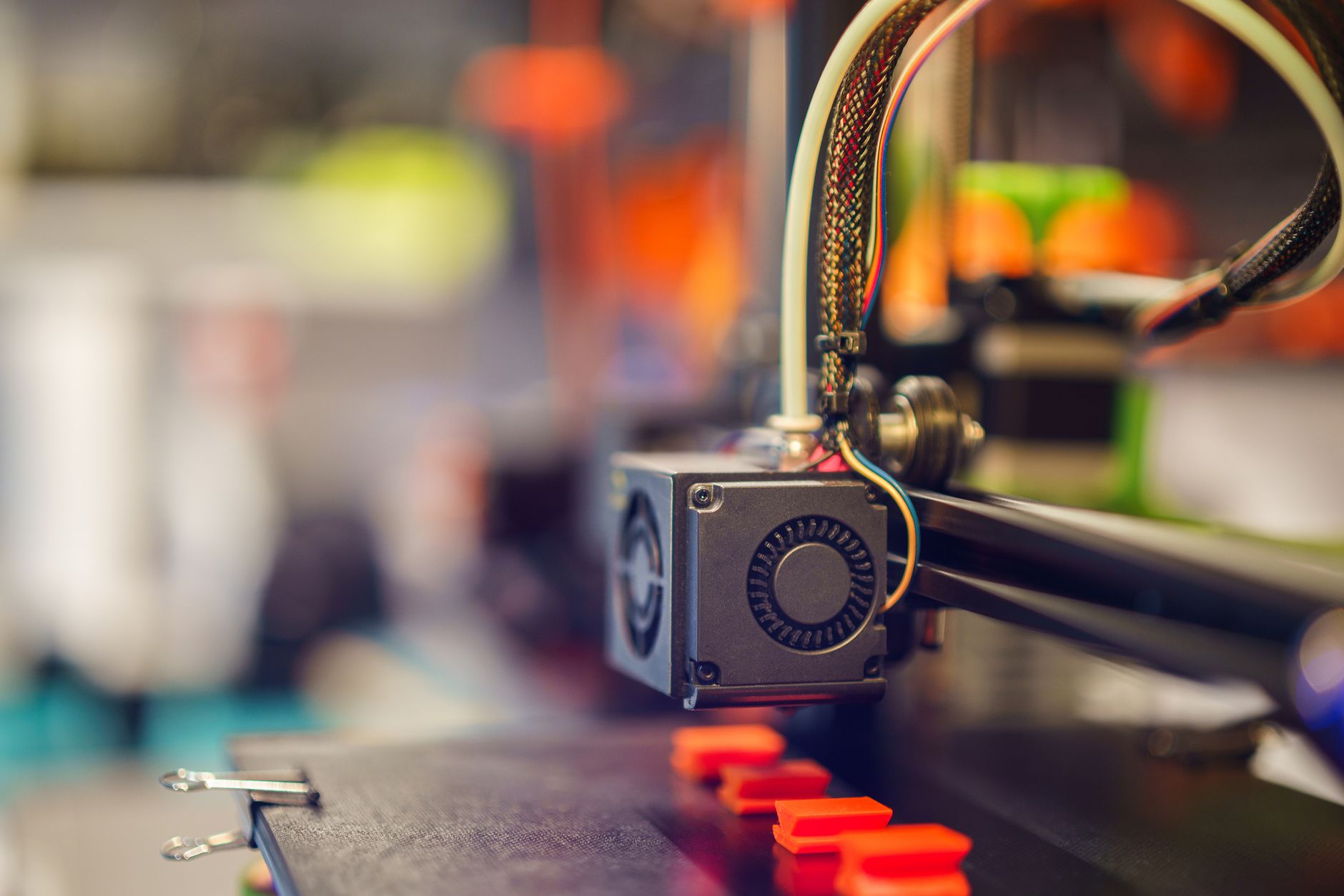
The Anycubic Kobra 2 Max brings a 420x420x500mm build volume and a 500mm/s top speed. Real-world quality lands around 250 to 300mm/s with standard PLA and PETG. The direct-drive extruder uses a 260°C nozzle and the textured PEI bed reaches 110°C. Layer height spans 0.1 to 0.4mm out of the box.
LeviQ 2.0 automatic bed leveling maps 49 points before every print. That is useful on a bed this large, because a 420mm surface can shift with temperature cycles. The high-flow hotend handles PETG, TPU, and ABS with proper tuning. Spool holder and filament runout sensor are included.
The biggest compromise is motion. The bed moves forward and back, so a 500mm deep print needs roughly a meter of desk clearance. It is also open frame. Large ABS parts can warp without an enclosure. For money-conscious makers who print helmets and armor in PLA, those trade-offs are acceptable.
Key strengths:
- ✅ 420x420x500mm build volume prints full-size helmets and armor
- ✅ 500mm/s top speed with usable 250-300mm/s quality
- ✅ LeviQ 2.0 automatic bed leveling with 49-point mesh
- ✅ High-flow hotend reaches 260°C nozzle and 110°C bed
- ✅ $569 street price undercuts 400mm competitors
- ❌ Open-frame bed-slinger needs roughly a meter of desk space
- ❌ Stock cooling can struggle with steep overhangs at top speed
- ❌ Assembly takes a beginner up to an hour
Who it’s for: Makers who want a huge build volume without paying Prusa XL money.
2. Elegoo Neptune 4 Max , Best budget large 3D printer
The Elegoo Neptune 4 Max is the budget king of 2026. A 420x420x500mm envelope costs $469, a price that was unthinkable a few years ago. It advertises 500mm/s, but plan on 250 to 350mm/s for clean prints with PETG. The direct-drive hotend reaches 300°C and the bed tops out at 110°C.
Klipper firmware ships stock. That gives you input shaping and pressure advance without a Raspberry Pi. The 0.05mm minimum layer height is fine for detailed miniatures, though you will rarely use it at full speed. Auto bed leveling, a filament runout sensor, and a large touchscreen are all included.
You are still buying an open-frame bed-slinger. Tall prints at high acceleration can show ringing. The heavy bed moves the entire part, so slow down for objects over 300mm. If you need maximum value and do not mind tuning, see our best budget 3D printers picks. For everything else, this is a ridiculous amount of build volume per dollar.
Key strengths:
- ✅ 420x420x500mm build volume at $469 list price
- ✅ 500mm/s top speed with Klipper input shaping
- ✅ 300°C nozzle supports PETG, TPU, and nylon
- ✅ Direct-drive extruder handles flexible filaments well
- ✅ Filament runout sensor and auto bed leveling included
- ❌ Open-frame design struggles with warp-prone ABS
- ❌ Large moving bed can cause ringing on tall parts
- ❌ Assembly and initial Klipper tuning take time
Who it’s for: Budget-first tinkerers who want the biggest build area per dollar.
3. Prusa XL , Best for multi-material production
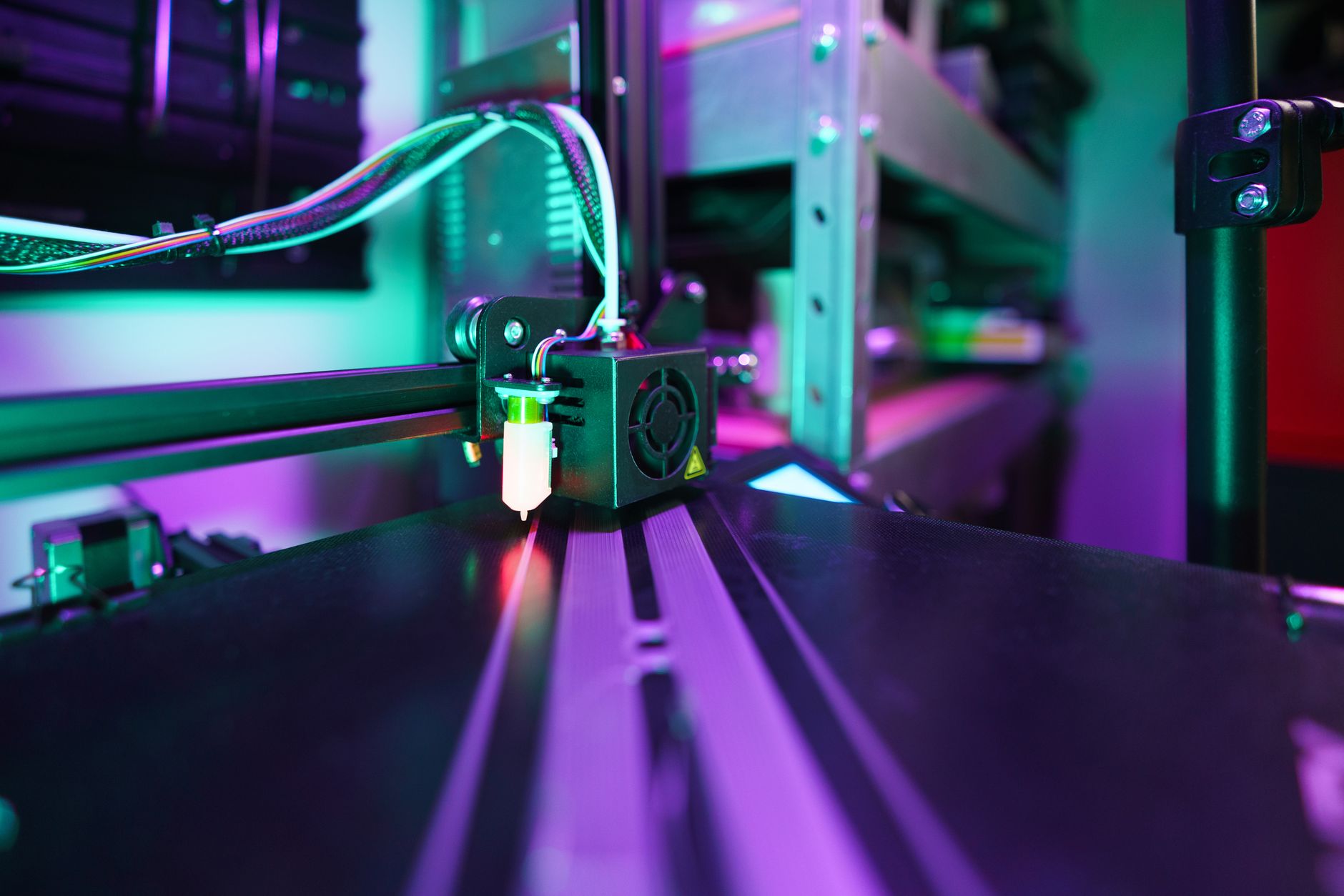
Prusa took a slow, deliberate path with the XL. The result is a 360x360x360mm CoreXY printer built around tool changing, not just big volume. The single-tool model starts at $1,999 semi-assembled. It reaches 300°C nozzle and 120°C bed, which covers PETG, ASA, polycarbonate, and nylon with proper profiles.
The tool changer is the real reason to spend. You can start with one head and add up to five later. Print a PETG support interface, then switch to PLA automatically. Prusa’s specifications list full compatibility and upgrade paths. The load cell bed leveling measures the actual nozzle contact, so first layers are consistent across the entire plate.
This is not a cheap printer. The base price is four times the Elegoo Neptune 4 Max. It also lacks an enclosure on the base model. But for print farms and advanced users, the reliability and multi-material workflow justify the cost. Check our best 3D printer filament guide before running exotic materials through those tool heads.
Key strengths:
- ✅ 360x360x360mm CoreXY frame with five-tool support
- ✅ 300°C nozzle and 120°C bed handle engineering materials
- ✅ Load cell automatic bed leveling for consistent first layers
- ✅ Prusa slicer profiles and print farm reliability
- ✅ Optional enclosure and swappable tool heads
- ❌ Starts at $1,999, far above large bed-slingers
- ❌ Tool changing adds mechanical complexity
- ❌ No enclosure included on base model
Who it’s for: Print farm operators and advanced makers who need multi-material or soluble support.
4. Creality CR-10 SE , Best 300mm entry point
The Creality CR-10 SE is the most approachable machine on this list. A 300x300x340mm build volume fits standard helmets and many prop parts. It prints at 250mm/s with a Sprite direct-drive extruder. Nozzle temperature reaches 260°C and the bed hits 110°C. At $349, it is the cheapest way to enter true 300mm territory.
Dual Z-axis rods keep the X gantry level, and CR Touch auto leveling removes much of the first layer guesswork. The flexible PEI sheet helps with bed adhesion. Layer resolution goes down to 0.1mm, fine for detailed prints. It lacks Klipper, but Creality’s firmware has basic input shaping.
The 300mm volume is the floor here. You lose 120mm on each side compared to the 420mm machines. The open frame also means ABS and ASA need an aftermarket enclosure. Still, for a first large printer, this one is easy to assemble and hard to misconfigure.
Key strengths:
- ✅ 300x300x340mm build at $349 street price
- ✅ 250mm/s printing with Sprite direct extruder
- ✅ CR Touch automatic bed leveling included
- ✅ Dual Z rods improve stability over older CR-10
- ✅ Simple assembly and widely available spare parts
- ❌ Smaller than 400mm rivals
- ❌ Open-frame bed-slinger needs an enclosure for ABS
- ❌ Creality firmware less flexible than Klipper
Who it’s for: Makers moving up from 220mm beds who do not need full 400mm volume.
5. Sovol SV08 , Best CoreXY value
Sovol SV08 takes a different path. It is a CoreXY kit with a 350x350x345mm build volume, linear rails, and stock Klipper. Advertised speed peaks at 700mm/s, though real prints land around 300mm/s with input shaping tuned. The hotend goes to 300°C and the bed reaches 110°C. At $579, it undercuts most CoreXY 350mm options.
This machine is built to be modified. A BigTreeTech mainboard runs Klipper, so you can adjust pressure advance, input shaping, and macros from a web browser. The direct-drive extruder and high-flow hotend handle PETG and ABS, but you will want an enclosure for warp-prone materials.
Expect assembly and calibration. The SV08 is not a plug-and-print machine. Bolting the frame square and setting belt tension takes several hours. Documentation is not as polished as Creality or Prusa. If you like tinkering, the value is hard to beat.
Key strengths:
- ✅ 350x350x345mm CoreXY build at $579
- ✅ 700mm/s advertised speed with high-flow hotend
- ✅ Linear rails and open-source Klipper included
- ✅ Direct-drive extruder for PETG and TPU
- ✅ Voron-style design has strong community mods
- ❌ Kit assembly takes several hours and needs tuning
- ❌ Open frame makes high-temperature materials tricky
- ❌ Spare parts support thinner than Creality or Elegoo
Who it’s for: Tinkerers who want a fast CoreXY platform without paying $2,000.
Frequently Asked Questions
What is considered a large 3D printer build volume?
A large 3D printer usually has at least 300mm in one or more axes. Machines at 350mm, 400mm, or 500mm are considered large format.
Is a 300mm build volume enough for helmets?
Yes, most standard adult helmets need around 280 to 300mm of width. A 300x300x340mm bed can print full helmets without splitting.
Are bed-slingers or CoreXY printers better for large prints?
CoreXY machines keep the bed steady and are better for tall or fast prints. Bed-slingers cost less but need lots of desk space and can shake at high speeds.
Do large printers need an enclosure?
Not for PLA or PETG. Materials like ABS, ASA, and nylon benefit from an enclosure to reduce warping and layer splitting.
What is the cheapest large 3D printer worth buying in 2026?
The Elegoo Neptune 4 Max at around $469 offers a 420x420x500mm build volume and 500mm/s top speed. The Creality CR-10 SE is the cheapest 300mm option.
How much space do I need for a 420mm printer?
Plan for at least 700mm of width and 600mm of depth for the printer plus cable and spool clearance. A 420mm bed-slinger needs roughly double the bed travel distance.
What Should You Remember?
- Build volume: 300mm is entry large format, but 420mm is the sweet spot for helmets and armor.
- Budget: The Elegoo Neptune 4 Max delivers 420mm for under $470.
- Speed: Ignore peak mm/s specs and expect 50 to 60 percent of advertised speed for clean prints.
- Motion: CoreXY machines handle tall, heavy parts better than bed-slingers.
- Materials: Open-frame printers are fine for PLA and PETG. Use an enclosure for ABS.
- Calibration: Auto bed leveling and input shaping matter more than extra millimeters.
- Price: A $569 machine can rival printers that cost three times as much if you tune it well.
This article is for general information only. Always follow your printer manufacturer’s guidelines and material safety data sheets (MSDS) for safe operation.