ABS, ASA, and nylon punish printers that lack an enclosure. These materials shrink as they cool, so a cool draft or a fan left on during a print can lift corners and split layer lines. That is why the best enclosed 3D printers in 2026 are no longer treated as premium extras. They are the baseline for functional parts. Before you choose, check our 3D printing materials guide for drying and storage notes. A hot nozzle alone will not save a nylon bracket or an ASA car-part prototype if the surrounding air temperature swings mid-print.
The 2026 market has matured. Bambu Lab’s current P1S and X1 Carbon lineup pushed desktop enclosed printers into the sub-$1,000 mainstream. Prusa answered with the CORE One, and QIDI and Creality now sell heated-chamber machines for less than $1,200. That competition means you no longer need a $3,000 professional FDM unit to print ABS, ASA, PA, or filled nylon reliably. Our best 3D printers 2026 roundup covers the open-frame alternatives, but this guide focuses only on machines with a real enclosure and high-temperature hardware.
Methodology: we compared build volume, maximum nozzle and bed temperatures, chamber temperature stability, and real-world speed. We also weighed part cooling, auto-calibration, and whether the printer can handle filled nylons without upgrades. Simplify3D’s materials guide recommends a heated enclosure or at least a stable warm chamber for ABS and Nylon. The PLA side is different, which is why open-frame printers are fine for some materials but not for these.
For ASA and ABS, the essential hardware is simple: an all-metal hotend that reaches at least 280°C, a bed that reaches 100°C or 110°C, and a chamber that stops room drafts. Nylon wants a dry filament path and often benefits from 300°C or 350°C. Active chamber heating helps, but it is not always mandatory if the printer seals well and you preheat the bed for 15 minutes. That means the right pick depends on your largest functional part, your tolerance for tinkering, and your budget. The six machines below cover different trade-offs without pretending every printer fits every workshop.
How Do the Top Options Compare?
| Printer | Best For | Build Volume | Max Nozzle / Bed | Speed | Price |
|---|---|---|---|---|---|
| Bambu Lab X1 Carbon | Best overall enclosed | 256 x 256 x 256 mm | 300°C / 120°C | Up to 500 mm/s | Check price |
| Bambu Lab P1S | Best value enclosed | 256 x 256 x 256 mm | 300°C / 100°C | Up to 500 mm/s | Check price |
| Prusa CORE One | Best repairable enclosed | 250 x 210 x 210 mm | 300°C / 120°C | Up to 300 mm/s travel | Check price |
| QIDI Tech X-Max 3 | Best large-format nylon workhorse | 325 x 325 x 315 mm | 350°C / 120°C | Up to 600 mm/s | Check price |
| Creality K2 Plus | Best high-temperature large build | 350 x 350 x 350 mm | 350°C / 120°C | Up to 600 mm/s | Check price |
| Voron 2.4 R2 Kit | Best DIY enclosed | 300 x 300 x 300 mm scalable | Up to 350°C / 120°C | 500+ mm/s with input shaper | Check price |
Prices are approximate street prices as of early 2026. Kit builds include base hardware but may require assembly, calibration, and optional upgrades. Check vendor sites for current configurations.
1. Bambu Lab X1 Carbon , Best overall enclosed
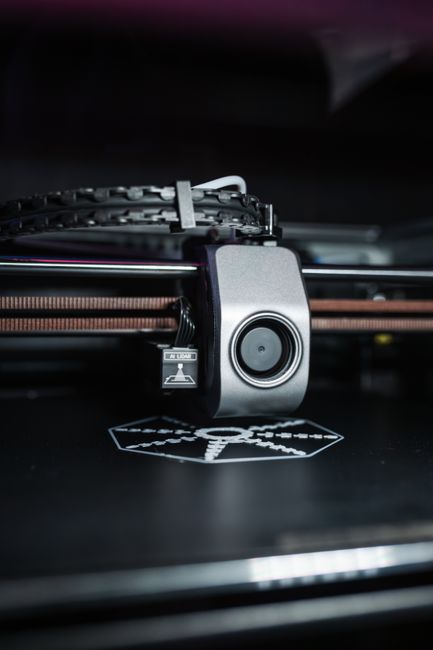
The Bambu Lab X1 Carbon remains the most automated enclosed printer in 2026. It has a 256 x 256 x 256 mm build volume, a 300°C all-metal hotend, and a 120°C heated bed. That combination covers ABS, ASA, PA-CF, and most filled nylons without hardware changes. Check the Bambu Lab X1 Carbon on Amazon.
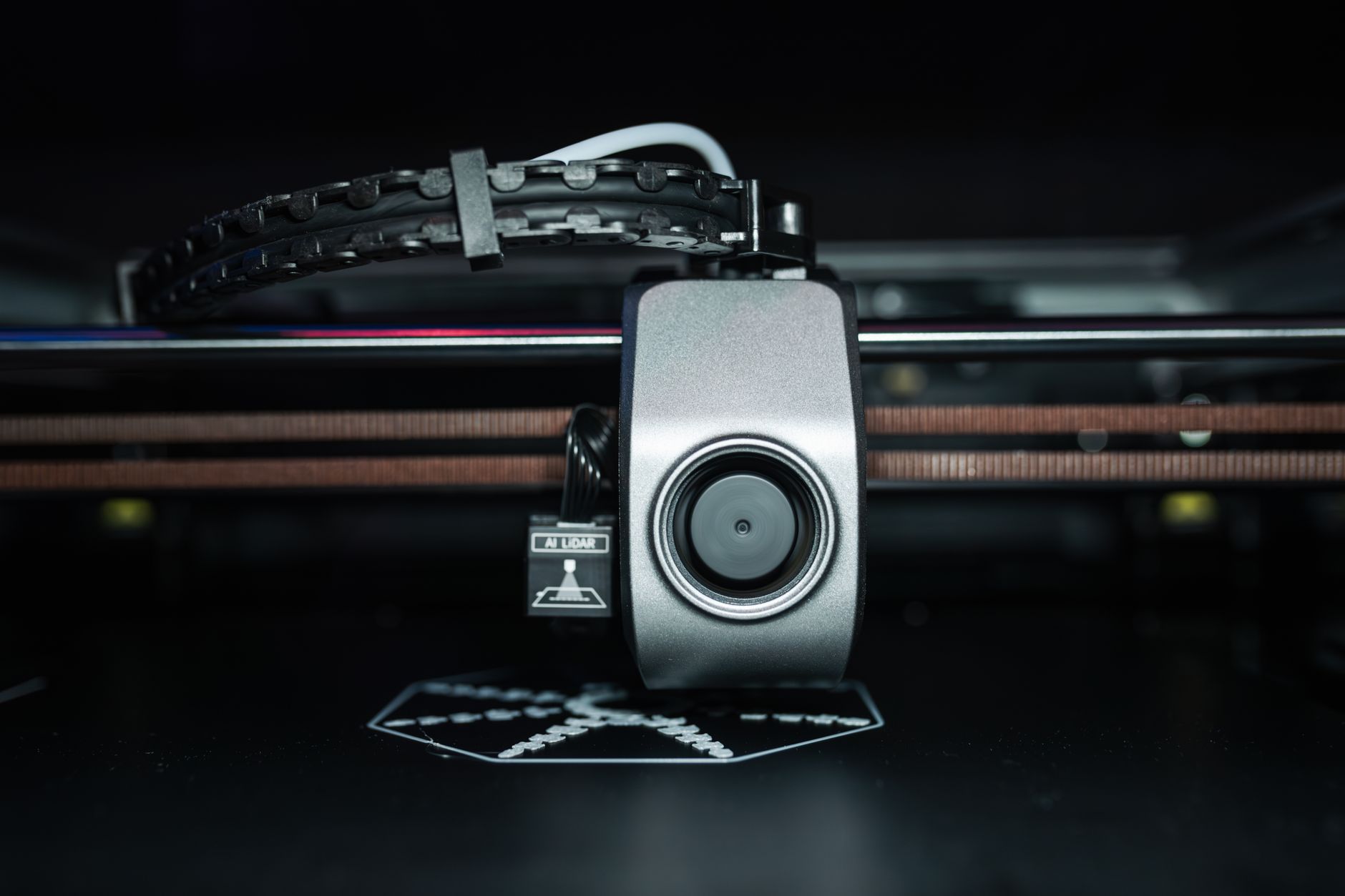
What makes it easy is the enclosure, not an actively heated one. The chamber warms from the bed and stays stable enough for anything up to about 200 mm long. For large flat nylon parts, you still need a dry box and sometimes a brim. Compared with budget machines, the X1C wins on repeatability. You spend less time reslicing and more time assembling parts. The Lidar sensor calibrates flow and first layer on each print, which matters when switching from a brittle ASA to a gummy unfilled nylon. Open-frame speed machines may chase 600 mm/s, but the X1C balances speed with heat. If raw speed matters more, see our fastest 3D printers guide.
Key strengths:
- ✅ Reaches 300°C nozzle and 120°C bed without aftermarket parts
- ✅ Consistent ABS and ASA prints with active chamber monitoring
- ✅ Reliable auto-calibration and flow control for filled nylons
- ✅ Compact but capable 256x256x256mm build volume
- ❌ Chamber is not actively heated, so cold rooms hurt ABS
- ❌ Replacement parts are mostly limited to Bambu’s supply chain
- ❌ Proprietary slicer features reduce flexibility for advanced users
Who it’s for: Choose the X1 Carbon if you want the most automated enclosed printing experience for ABS, ASA, and filled nylons without building or tuning a machine.
2. Bambu Lab P1S , Best value enclosed
Bambu’s P1S is the budget pick for enclosed printing. It keeps the same 256 x 256 x 256 mm CoreXY frame and 300°C nozzle as the X1 Carbon, but drops the lidar and keeps the bed at 100°C. That still works for ABS and ASA, especially with a brim or enclosure preheating. Check the Bambu Lab P1S on Amazon.
At $699, the P1S delivers most of the X1C’s material coverage. Nylon is the main compromise. Large unfilled nylon prints can warp at a 100°C bed, and filled grades benefit from the X1C’s better flow calibration. If you mostly print ABS brackets or ASA outdoor parts, the P1S is the sensible buy. You can always add a hardened steel nozzle and extruder gear later. For more inexpensive machines, see our best budget 3D printers guide.
Key strengths:
- ✅ Same 256x256x256mm CoreXY frame as the X1 Carbon
- ✅ Enough nozzle temperature for most ABS and ASA
- ✅ Significantly cheaper than flagship enclosed printers
- ✅ Strong part cooling works with PLA, PETG, and ABS
- ❌ 100°C bed is marginal for large nylon parts
- ❌ No Lidar calibration, so filament changes need more manual tuning
- ❌ Noisy stock fan and less robust community mod support
Who it’s for: Choose the P1S if you want a sub-$700 enclosed printer for ABS and ASA with a clear upgrade path.
3. Prusa CORE One , Best repairable enclosed
Prusa’s CORE One is built around a 250 x 210 x 210 mm enclosed frame, a 300°C hotend, and a 120°C bed. Prusa’s CORE One page lists the exact thermal limits. It is not a speed demon, but the chamber holds heat well and PrusaSlicer profiles for ASA and PA are mature. If you have used PrusaSlicer before, the material settings alone save hours.
The real advantage is serviceability. Open-source parts, a long-lived board, and a large community mean you can repair most failures without shipping the machine back. The downside is the smaller X and Y build compared with similarly priced printers from Bambu and QIDI. See our best 3D printer upgrades guide if you buy the kit and want hardened nozzles or a better hotend for rough nylons. The assembled unit starts around $1,149.
Key strengths:
- ✅ 300°C nozzle and 120°C bed cover ABS, ASA, and some nylons
- ✅ Open-source hardware and printable parts make repairs simple
- ✅ Quiet operation and good chamber temperature stability
- ✅ Strong PrusaSlicer profiles reduce trial and error
- ❌ Smaller build area than similarly priced CoreXY rivals
- ❌ Kit assembly takes several hours, though prebuilt units cost more
- ❌ Print speed is slower than Bambu and QIDI flagships
Who it’s for: Choose the Prusa CORE One if repairability, open-source hardware, and consistent material profiles matter more than maximum speed.
4. QIDI Tech X-Max 3 , Best large-format nylon workhorse
The QIDI Tech X-Max 3 is the only printer in this group with an actively heated chamber at a sub-$900 price. Specs include a 325 x 325 x 315 mm build volume, a 350°C nozzle, and a 120°C bed. That makes it a stronger nylon workhorse than the P1S and a better large-format option than the X1C. The chamber heater holds roughly 60°C inside, which significantly reduces warping on long ASA prints.
You sacrifice some polish. QIDI’s firmware and profiles have improved, but the experience feels less refined than Bambu’s. Auto-leveling works, yet the gantry can need shimming after a few hundred hours. Still, for large ABS or PA12 parts, the build volume and hotend temperature justify the trade-off. See our best large 3D printers guide for more big-format choices.
Key strengths:
- ✅ 325x325x315mm build volume handles full-size functional parts
- ✅ 350°C nozzle supports unfilled nylons like PA12
- ✅ Actively heated chamber reduces warping on long prints
- ✅ 600mm/s travel and CoreXY motion cut large print times
- ❌ Bulkier and heavier than most enclosed desktop printers
- ❌ Older firmware and profiled feel less polished than Bambu
- ❌ Auto-leveling can require manual shimming after service
Who it’s for: Choose the X-Max 3 if you need active chamber heat and a 350°C nozzle for large nylon or ABS parts.
5. Creality K2 Plus , Best high-temperature large build
The Creality K2 Plus follows the same formula as the X-Max 3 but with a bigger frame. It offers a 350 x 350 x 350 mm build volume, a 350°C hotend, and a 120°C bed. That is the largest print bed in this roundup. If you are making multi-piece ABS enclosures or long nylon tools, the extra space reduces glue joints and assembly time.
Like most Creality machines, the K2 Plus launches with firmware that needs attention. Expect to update and calibrate before trusting a 48-hour nylon print. The active chamber heat helps, but the larger volume takes longer to warm. Creality’s price is aggressive for this hardware. It is a strong pick if you need maximum build size and can tolerate some setup friction.
Key strengths:
- ✅ 350x350x350mm build volume is one of the largest in this class
- ✅ 350°C hotend and 120°C bed suit nylon and polycarbonate
- ✅ Enclosed chamber with active heating keeps ABS flat
- ✅ Dual-motor Z and input shaping allow reliable speed
- ❌ Large frame takes significant bench space
- ❌ Initial firmware bugs require updates out of the box
- ❌ Heavy gantry can show ringing at extreme speeds
Who it’s for: Choose the K2 Plus if you want a high-temperature 350mm build platform without jumping to an industrial printer.
6. Voron 2.4 R2 Kit , Best DIY enclosed
The Voron 2.4 R2 is a fully configurable DIY CoreXY platform. You choose the build size, hotend, controller, and chamber heater. A common spec is 300 x 300 x 300 mm, but many builders scale to 350 mm. With the right parts, it supports a 350°C hotend and a 120°C bed. That makes it the most flexible option here.
The catch is assembly. Wiring, firmware setup, and calibration can take a full weekend or longer. There is no manufacturer warranty on the finished machine. Material profiles are mostly community driven, so you will spend time tuning ABS and nylon. The reward is a printer you can repair and modify forever without being locked into one vendor’s parts.
Key strengths:
- ✅ Fully configurable build size, hotend, and controller
- ✅ Can support 350°C hotends and 120°C beds with chosen parts
- ✅ Quad gantry leveling takes bed probing to enthusiast level
- ✅ Open-source design has a huge mod community
- ❌ Kit wiring and firmware setup can take a full weekend
- ❌ No manufacturer warranty on the assembled machine
- ❌ Material profiles are mostly community driven, not plug-and-play
Who it’s for: Choose a Voron 2.4 R2 if you are an experienced tinkerer who wants a fully enclosed and upgradeable CoreXY printer.
Frequently Asked Questions
Do I really need an enclosed printer for ABS and ASA?
Yes for anything larger than a small test part. An enclosure stabilizes air temperature and reduces warping and cracking. Without it, layers cool unevenly and corners lift.
Can I print nylon on any enclosed printer?
Not always. Nylon usually needs a dry filament path and a nozzle capable of 280 to 300 degrees C. An all-metal hotend and a bed at 100 degrees C or higher matter more than the enclosure alone.
What bed temperature should I use for ABS?
Start around 100 to 110 degrees C for the bed and 250 to 260 degrees C for the nozzle. Some blends benefit from a 120 degree C bed if your printer supports it.
Are enclosed printers good for PLA and PETG?
Most are fine, but you should open the door or top panel for PLA to avoid heat creep. PETG prints well in an enclosed chamber at moderate bed temperatures.
How much do enclosed 3D printers cost in 2026?
Entry-level enclosed machines start around 600 to 700 dollars. Flagship units with better automation run 1,100 to 1,500 dollars, and large-format or kit builds can exceed 3,000 dollars.
Is a Voron kit a bad choice for beginners?
Usually yes. A Voron 2.4 requires wiring, firmware setup, and calibration. First-time builders should buy a factory-assembled enclosed printer unless they enjoy troubleshooting.
What Should You Remember?
- Enclosure first: ABS and ASA want stable chamber air, not just a hot nozzle.
- Nozzle and bed: Buy 300°C nozzle and 100°C bed or better for nylon.
- Dry filament: Nylon and ABS absorb moisture. Dry before printing.
- Build volume: Match the build size to actual functional parts, not just specs.
- Automation vs repair: Bambu and Prusa take different paths. Pick your priority.
- Budget still works: A P1S covers most ABS and ASA for less.
- Active chamber heat: QIDI and Creality K2 Plus help large parts stay flat.
This article is for general information only. Always follow your printer manufacturer’s guidelines and material safety data sheets (MSDS) for safe operation.